
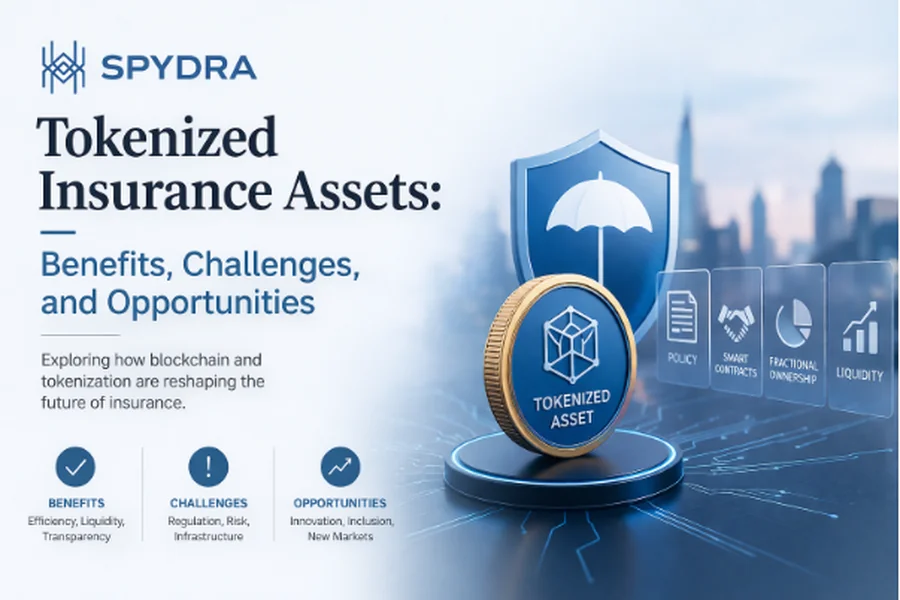
Introduction: The Shift Toward Insurance Tokenization
The global insurance industry has long struggled with inefficiencies—manual claims processing, fraud risks, limited transparency, and slow settlement cycles. As digital transformation accelerates, Insurance Tokenization is emerging as a powerful solution to modernize how risk is managed, traded, and settled. By leveraging blockchain technology, insurers can convert policies and risk pools into digital tokens, unlocking new levels of efficiency, liquidity, and trust.
What is Insurance Tokenization?
“Insurance tokenization” refers to the process of converting insurance policies, risk exposure, or insurance-linked assets into blockchain-based digital tokens. These tokens represent ownership, participation, or rights within an insurance contract.
Using smart contracts, tokenized insurance assets can automate claims processing, enforce policy rules, and ensure transparent execution. This eliminates intermediaries and significantly reduces administrative overhead while improving accuracy and speed.
Benefits of Tokenized Insurance Assets
1. Enhanced Liquidity and Fractional Ownership
Traditional insurance assets are illiquid and difficult to trade. Tokenization enables fractional ownership, allowing investors to participate in risk pools with smaller capital requirements. This opens up new funding avenues for insurers.
2. Faster Claims Processing
Smart contracts automate claims verification and payouts based on predefined conditions. For example, parametric insurance can trigger instant payouts when specific data thresholds are met, reducing delays and disputes.
3. Improved Transparency and Fraud Reduction
Blockchain’s immutable ledger ensures that all transactions are recorded and verifiable. This transparency reduces fraudulent claims and builds trust among stakeholders.
4. Global Accessibility
Tokenized insurance platforms can be accessed globally, enabling cross-border participation without traditional barriers. This democratizes access to insurance products and investment opportunities.
Key Challenges in Insurance Tokenization
Regulatory Uncertainty
Insurance is a highly regulated industry, and tokenization introduces new legal complexities. Different jurisdictions have varying rules, making compliance a significant challenge.
Integration with Legacy Systems
Most insurers rely on outdated infrastructure. Integrating blockchain solutions with legacy systems requires time, investment, and technical expertise.
Data Privacy and Security
While blockchain offers transparency, sensitive insurance data must be protected. Balancing privacy with decentralization remains a critical concern.
Market Adoption
Despite its potential, Insurance Tokenization is still in its early stages. Limited awareness and resistance to change can slow adoption among traditional insurers.
Opportunities and Use Cases
Parametric Insurance
Tokenization enables automated payouts based on predefined triggers such as weather conditions or natural disasters. This reduces claim processing time and improves customer experience.
Decentralized Insurance Platforms
Blockchain-based platforms allow users to pool risk and share coverage without traditional insurers, creating more inclusive and flexible insurance models.
Tokenized Reinsurance Markets
Reinsurance can be tokenized to allow global investors to participate in risk-sharing, improving capital efficiency and diversification.
Peer-to-Peer Insurance
Tokenization facilitates direct interaction between policyholders, reducing costs and enhancing transparency in coverage agreements.
Role of a Web3 Development Company
A Web3 Development Company plays a crucial role in enabling Insurance Tokenization by providing the technical and strategic foundation required to build scalable solutions. Key contributions include:
- Smart Contract Development: Automating policy execution and claims settlement
- Token Design and Standards: Creating compliant and secure token structures
- Blockchain Integration: Connecting existing systems with decentralized infrastructure
- Compliance Frameworks: Ensuring adherence to regulatory requirements across jurisdictions
By partnering with an experienced Web3 Development Company, insurers can accelerate their transition to tokenized ecosystems while minimizing risks.
Future Outlook: What Lies Ahead
The future of Insurance Tokenization is promising. As regulatory clarity improves and blockchain adoption grows, tokenized insurance assets are expected to become mainstream. Innovations in decentralized finance (DeFi) and real-world asset (RWA) tokenization will further expand opportunities for insurers and investors alike.
By 2026 and beyond, we can expect increased institutional participation, more sophisticated tokenized insurance products, and seamless integration with global financial systems.
Conclusion: Unlocking the Future of Insurance
Insurance Tokenization is redefining how risk is managed, shared, and monetized. From faster claims processing to global accessibility and improved transparency, the benefits are substantial. While challenges remain, the opportunities far outweigh the barriers.
For enterprises looking to stay competitive, now is the time to explore tokenized insurance solutions and partner with a reliable Web3 Development Company to lead the transformation.
Meta Description
Insurance Tokenization is transforming the insurance industry with blockchain. Explore benefits, challenges, and opportunities of tokenized insurance assets in 2026.
Featured Snippet Optimization
What is Insurance Tokenization?
Insurance Tokenization is the process of converting insurance policies or risk assets into blockchain-based digital tokens, enabling automation, transparency, and fractional ownership through smart contracts.
Top Benefits of Insurance Tokenization:
- Faster claims processing through automation
- Increased transparency and fraud reduction
- Fractional ownership and improved liquidity
- Global accessibility to insurance products
Key Challenges of Insurance Tokenization:
- Regulatory uncertainty
- Integration with legacy systems
- Data privacy concerns
- Slow market adoption