
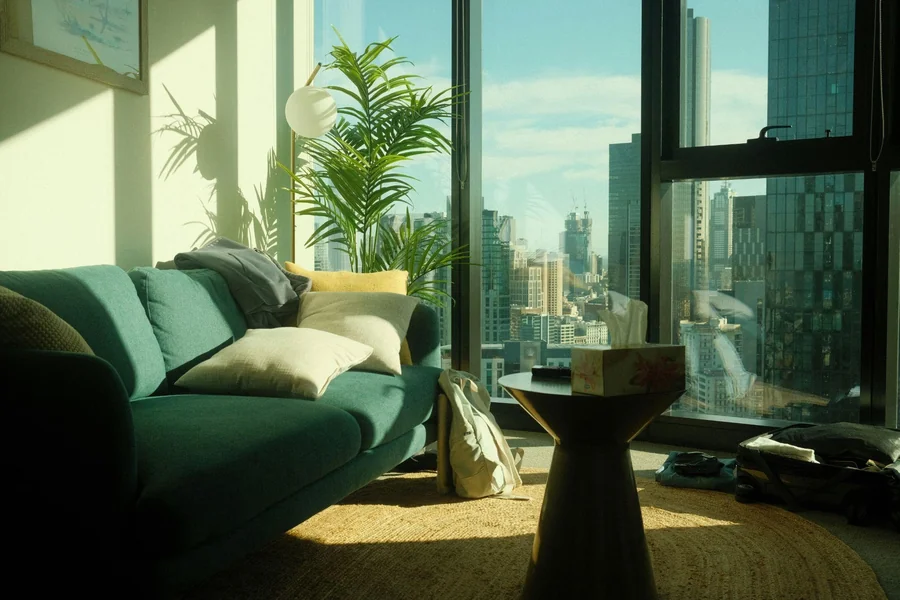
Urban life has always been a catalyst for design innovation. The compact apartments, the ceaseless rhythm, the endless mix of cultures – all these shape the way city dwellers think about their interiors. In the modern metropolis, space is both a luxury and a laboratory. It forces creativity, celebrates individuality, and constantly redefines what “home” means in an environment that never truly stops moving.
Today,we can notice thre distinctive interior design styles that reflect the pressures, pleasures, and paradoxes of city life: Modern Minimalism, Eclectic Bohemianism, and Biophilic Design. In this article we explore how cities, in all their complexity, continue to shape the homes within them.
The Minimalist Calmness
In the heart of Seoul’s Gangnam district, one might find a studio apartment with just enough room for a futon, a foldable table, and a single piece of art, yet it feels spacious, serene, even luxurious. This is the power of Modern Minimalism, a movement that has become synonymous with urban sophistication.
Minimalism first rose as an antidote to clutter, but in the context of city life, it’s not just an aesthetic choice, but a psychological one. For many residents of high-density cities, the home becomes a retreat, a place to filter out the visual and mental noise of the outside world. Smooth plaster walls, pale oak floors, and restrained palettes of cream and sand form a quiet backdrop for intentional living.
The new urban minimalist isn’t ascetic. Rather, they edit their environment the way a photographer frames a shot: carefully, purposefully, with an eye for balance. Every object earns its place. A chair might be a design classic, chosen not only for its silhouette but for its ability to elevate the space around it. Lighting plays a critical role and is often layered through indirect LED strips or sculptural pendant fixtures that cast soft shadows across clean surfaces.
In apartments where square footage is measured by the inch, furniture becomes multifunctional: a bench hides storage, a wall folds out into a desk. Built-ins are essential: the difference between chaos and calm often lies in a well-fitted wardrobe or a sliding panel that conceals the practicalities of modern life.
The influence of Japanese and Scandinavian design philosophies, often combined in the hybrid “Japandi” aesthetic, is unmistakable. Both celebrate craftsmanship, natural materials, and a quiet respect for imperfection. Together, they create homes that feel simultaneously global and grounded, embodying the transnational nature of contemporary cities.
Minimalism in the city also carries an emotional resonance. For professionals navigating the overstimulation of urban life, the pared-down home becomes a space of clarity. The absence of excess invites presence. In these interiors, the smallest gestures matter: the grain of a wooden tray, the soft weave of linen curtains, the way morning light touches a bare wall.
Storytelling Through Space
Across the globe, in a Parisian attic tucked under a mansard roof, an entirely different kind of interior takes shape. Where the minimalist finds peace in restraint, the urban collector finds meaning in abundance. This is Eclectic Bohemianism, a movement born out of curiosity, nostalgia, and an unshakable desire to tell stories through design.
The bohemian apartment is meticulously curated. Every piece, from the antique mirror sourced at a flea market in Lisbon to the rattan chair rescued from a Brooklyn sidewalk, carries a memory. For city dwellers who travel, collect, and move through diverse cultural worlds, their homes become a living map: a mosaic of textures, histories, and emotions.
Urban bohemian interiors thrive on contrast. Vintage furniture mingles with contemporary art. Handwoven Moroccan rugs lie beneath sleek mid-century coffee tables. Color is not feared but embraced: mustard, teal, terracotta, and deep indigo coexist in a confident, lived-in harmony.
Walls are often treated as canvases. Layered gallery walls display everything from children’s drawings to framed photography, creating an effect that is both intimate and expressive. And in kitchens or bathrooms, mosaic tiles are having a renaissance: jewel-toned pieces arranged in patterns that recall Mediterranean courtyards or 1970s terrazzo floors.

Textiles are central to this aesthetic: velvet cushions, embroidered throws, and linen drapes soften the edges of small urban rooms. Lighting, too, plays a poetic role: mismatched lamps cast warm, golden pools of light that shift through the evening, echoing the glow of cafés and galleries that define city nightlife.
What makes the bohemian interior uniquely urban is its resistance to conformity. In cities where apartments are built from identical floor plans, individuality becomes an act of rebellion. The collector’s home evolves over time, resisting the polished perfection of magazine spreads. A chipped ceramic bowl becomes precious because it was bought on a trip to Marrakech; a poster from a forgotten exhibition becomes a conversation starter.
There’s an honesty to these spaces: they reflect the layered reality of urban life itself. Just as the city is a patchwork of neighborhoods, languages, and eras, so too is the bohemian apartment a study in contrast and coexistence.
Increasingly, designers are taking this philosophy into the realm of customization, commissioning modern mosaic artwork or bespoke furniture that blends cultural references into something entirely new. It’s all about finding beauty in the unexpected harmony between the old and the new.
Green Living in a Concrete Jungle
The third movement shaping urban interiors today draws directly from a universal craving: the need to reconnect with nature. As city skylines grow taller and lives become more digital, many urbanites are responding by bringing the outdoors in. The result is Biophilic Design, a philosophy that merges architecture, ecology, and well-being. A notable example of this evolving urban aesthetic can be seen in the Perifa development Putney Wharf, where contemporary design principles meet waterfront living, blending minimalist form with community-centered spaces that reflect the harmony between modern architecture and nature.
At its core, biophilic design is about fostering a sensory relationship with the natural world. It’s not limited to houseplants but extends to materials, light, and even sound. Reclaimed wood, stone surfaces, and raw textiles provide tactile warmth; sunlight and ventilation become design priorities rather than afterthoughts.

In urban apartments where access to gardens or balconies is limited, vertical greenery, hanging planters, and hydroponic systems allow nature to thrive indoors. Architects are reimagining city lofts as indoor ecosystems, complete with micro-gardens, moss walls, and water features that hum softly in the background.
Ironically, the most futuristic cities are also the ones most invested in reconnecting with nature. Smart homes now integrate air-purifying systems, daylight sensors, and irrigation technologies that support plant life with minimal effort. Designers are merging sustainability with serenity, not only through organic materials but through layouts that promote natural movement and mindfulness.
Biophilic interiors also borrow heavily from the language of wellness. The placement of a reading nook near a window, the use of earthy tones like sage and clay, and the integration of natural fragrances such as cedar or eucalyptus all contribute to a sensory balance that counteracts urban overstimulation.
In New York’s converted warehouses and London’s glass-walled penthouses, this style manifests as a gentle rebellion against the steel and concrete of cityscapes. Greenery softens the hard lines of architecture; light transforms rigid spaces into organic habitats. Even a single tree planted in a courtyard or a kitchen herb garden can shift the emotional atmosphere of a home.
Beyond aesthetics, biophilic design speaks to sustainability and responsibility – key concerns for modern urbanites. It’s about designing not just for beauty, but for longevity, creating homes that breathe rather than consume.
The Common Thread: Design as Urban Survival
Though distinct in style, all three of these movements — Minimalism, Bohemian Eclecticism, and Biophilic Design — share a fundamental truth: they are all responses to the conditions of city life.
In an environment defined by constant motion, noise, and proximity, design becomes a form of survival. The minimalist finds clarity through reduction, the bohemian finds identity through accumulation, and the nature enthusiast finds calm through reconnection. Each style offers a way to create boundaries, balance, and meaning within the intensity of the urban landscape.
As cities continue to expand and environmental pressures intensify, the next wave of design will likely merge these movements into something even more holistic. We’ll see minimalist forms built from sustainable materials, bohemian layers composed of recycled textiles, and biophilic layouts supported by smart technology.
Designers are already experimenting with hybrid concepts: urban gardens that double as social hubs, co-living spaces infused with handcrafted details, and modular units that evolve with their inhabitants’ lives. The new luxury in city living isn’t size or opulence — it’s adaptability and authenticity.